
What Makes a Product Page Convert (Backed by Real Data)

Updated: Jun 27, 2025
In today's competitive ecommerce landscape, understanding what drives conversions on a product page can be the key to turning a casual visitor into a loyal customer. Your product page is more than just a digital listing; it showcases your offerings and guides customers toward making purchases. Factors like layout, compelling copy, high-quality images, social proof, and trust signals all play essential roles in encouraging visitors to complete their transactions. This post examines these elements in detail, using insights from Neptunys’ own experiences to provide real-world applications.
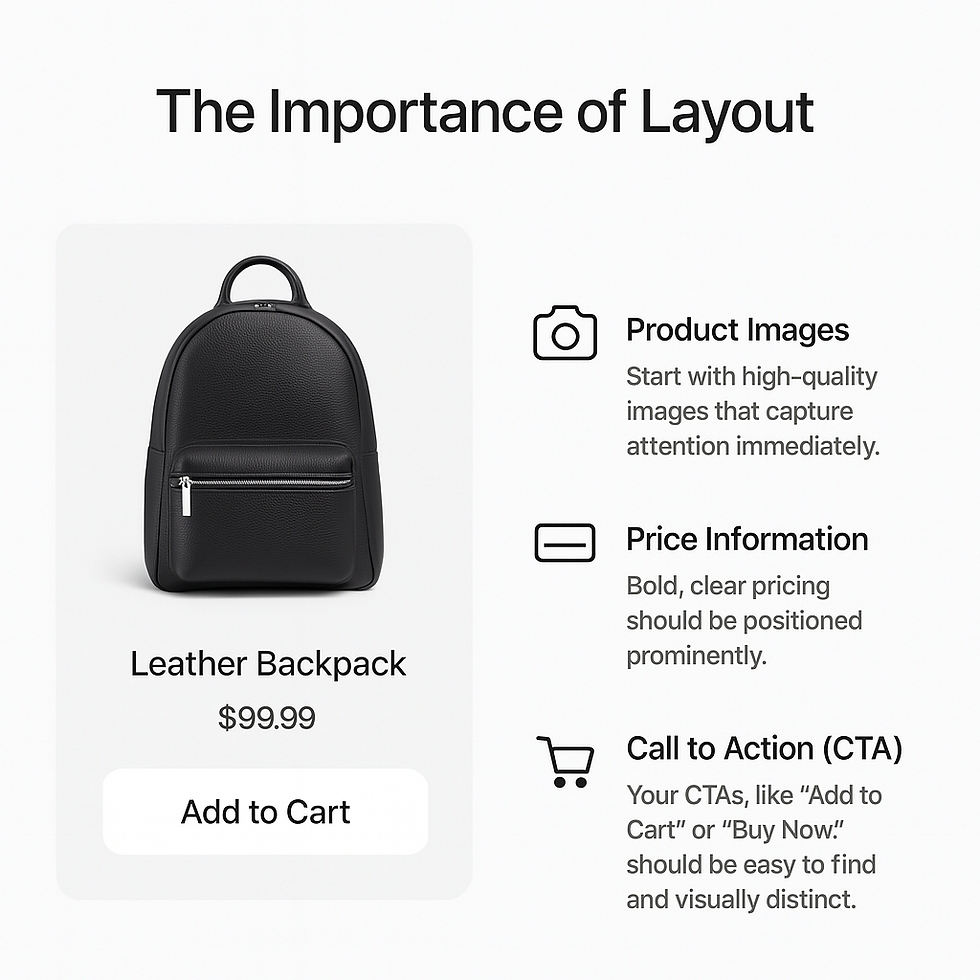
The Importance of Layout
The layout of your product page is crucial. A clean, intuitive design directs a customer's attention to what matters most—the product.
Consider these layout essentials:
Product Images: Start with high-quality images that capture attention immediately.
Price Information: Bold, clear pricing should be positioned prominently.
Call to Action (CTA): Your CTAs, like “Add to Cart” or “Buy Now,” should be easy to find and visually distinct.
For example, Neptunys discovered that a tidy layout increased their conversion rates by over 20%. By placing product descriptions next to images and ensuring pricing was easy to spot, they kept users engaged and focused on the product.
The Power of Compelling Copy
The copy on your product page should go beyond mere descriptions. It should tell a story that connects with buyers. Engaging copy not only highlights the product features but also illustrates how it can benefit the user.
Here are some effective copy practices:
Focus on Benefits: Clearly explain how your product can solve a real problem. For instance, a noise-canceling headphone should be presented as a solution for a peaceful environment in noisy settings.
Use Persuasive Language: Words like “transform” or “exclusive” can create a sense of urgency and desirability.
Incorporate SEO Keywords: Useful keywords such as "ecommerce product page best practices" can improve your page's visibility in search engines.
Neptunys reports that pages with storytelling in their descriptions saw a sales increase of up to 30%, driven by relatable narratives that resonate with potential customers.

Impact of Images
A high-quality image can greatly impact a customer's decision-making process. Images allow them to visualize what they’re buying, making the product more tangible.
Consider these tips for using images effectively:
Use Multiple Angles: Provide images that showcase the product from different perspectives. A clothing retailer, for example, might display a shirt on a mannequin, on a hanger, and being worn by a model.
Zoom Features: Enable zoom to allow customers to inspect product details closely.
Lifestyle Images: Show your products in real-life situations to help customers imagine their use.
Neptunys found that incorporating lifestyle images into their pages improved conversion rates by 25%. This aligns with research showing that 63% of consumers prefer to see products in context before buying.

The Role of Reviews
Customer reviews are among the most powerful tools for establishing trust. They provide social proof, reassuring potential buyers about the product's quality and value.
To make the most of reviews on product pages:
Highlight Positive Reviews: Feature testimonials that showcase beneficial experiences.
Show Ratings: Prominently display star ratings so customers can quickly assess overall satisfaction.
Encourage User-Generated Content: Request customers to share photos of your products in use for added credibility.
Neptunys observed that product pages with combined written and visual reviews experienced a 30% increase in engagement. These testimonials serve as influential motivators for hesitant buyers.
Utilizing Trust Signals
Building trust is essential for converting first-time visitors. Trust signals can encompass product guarantees, return policies, and secure payment options.
Here are some key trust signals to add to your product pages:
Secure Checkout Badges: Clearly display icons confirming secure and encrypted transactions.
Money-Back Guarantee: Offering a satisfaction guarantee can reduce potential buyer anxiety.
Authenticity Icons: Use badges to highlight genuine, high-quality products.
Neptunys' data indicates that incorporating strong trust signals led to a 20% increase in customer confidence, often translating to higher sales figures.
Enhancing Your Product Page for Success
Creating a product page that converts effectively combines art and science. By optimizing layout, crafting compelling copy, using quality images, integrating reviews, and employing trust signals, you create an environment that encourage conversions and enhances customer satisfaction.
Neptunys' experiences show that even minor adjustments can lead to significant improvements in ecommerce performance. In a rapidly changing online shopping landscape, your product pages must reflect these best practices to remain competitive.
By concentrating on user experience and leveraging effective design and communication strategies, ecommerce brand owners can build product pages that not only attract visitors but convert them into loyal customers.
Implement these strategies thoughtfully, and you will likely see your conversion rates rise. A successful product page caters to its audience by providing essential information while addressing their needs.


Comments